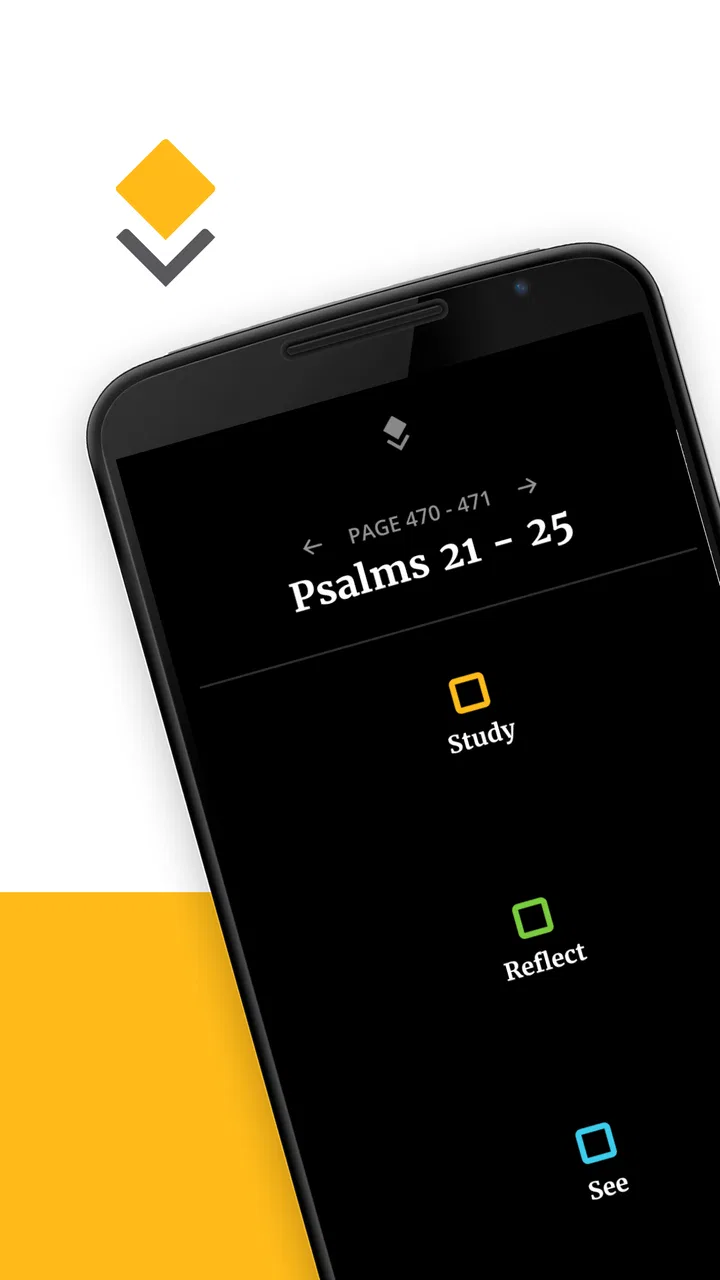
Filament Bible
- 4.1
- Rating
- 100.00K
- Installs
- Free
- Price

 Analysis by App-foxy
I found Filament Bible most useful when I treated it as a shared reading companion rather than just another Bible app. Its appeal is straightforward: it connects a printed Filament Bible with digital material from Tyndale House, giving a household a way to move between a physical book and a phone. That combination feels more intentional than keeping every reading session inside a screen, especially when several people use the same Bible at home.
The app is free, aimed at Everyone, and belongs to the Books & Reference category. It has reached over one hundred thousand installs, with an average rating of 3.9 from around one thousand ratings. Those figures suggest a useful but not universally smooth experience. After spending time with it, I can see why it suits readers who already like the print-and-digital idea, while also understanding why someone wanting a completely independent Bible app may find it less convenient.
How Filament Bible works in a shared home
The central experience is built around a physical Filament Bible and its digital companion. Instead of asking every reader to choose between paper and a phone, the app encourages both. I can imagine leaving the printed Bible on a coffee table, reading a passage together, then using the phone for additional material when someone wants more context or a different way to engage with the text.
You May Also Like

 Blood Strike: 2.5 Anniversary
Blood Strike’s Loadouts Turn Every Drop Into a Tactical Gamble
A close look at Blood Strike’s custom loadouts: how fast access to signature weapons reshapes its battle royale rhythm, rewards preparation, and narrows the gap between fights.

 Pandora - Music & Podcasts
Pandora’s Music Is Easy to Start, but Harder to Recover
Pandora’s strength is its low-effort path from a seed to a station. Its weak spot is how much confidence it asks you to place in connection, setup, and quiet recovery.

 8 Ball Pool
 Is Built on Rivalries, Rematches, and Routine
A close look at the rivalries, rematches, shared routines, and unanswered safety questions that turn a quick pool match into a persistent mobile community.

 Samsung Music
’s Quiet Strength Is Playing What You Already Own
Its reach comes less from spectacle than from dependable access to a personal library. That simplicity is both the app’s strongest retention engine and its ceiling.

 AccuWeather: Weather Radar
AccuWeather Review: A Quick, Clear Forecast for Everyday Decisions
For everyday plans, the best forecast is the one you can understand quickly. AccuWeather makes rain timing, radar, and local conditions easy to act on, with a few trade-offs.

 Hill Climb Racing
Why Hill Climb Racing Still Turns Crashes Into One More Run
A tiny car, a bumpy hill and one more upgrade: Hill Climb Racing keeps resurfacing because its simple chaos makes every near-miss feel personal.
More From Our News Desk



That makes it particularly interesting for a household with different reading habits. One person may prefer the feel of paper and the slower pace of turning pages. Another may be more comfortable using a phone for related reading. A third person may only want to listen, explore, or look up material briefly. The app does not force the whole group into one format, which is a genuine strength.
A realistic evening routine would be simple. I could read a chapter from the printed Bible at the kitchen table, pass the phone to another family member to explore the connected digital content, and then return to the paper without interrupting the conversation. The value is not that the app replaces discussion; it gives the discussion somewhere to go when a question comes up.
There is also a useful distinction between shared access to a device and shared ownership of a reading experience. If the phone stays in a common room, the app can support a group session naturally. However, the person holding the phone controls the digital part at that moment. That means it works best when people take turns or agree on what they are exploring, rather than assuming everyone can browse independently at the same time.
The best household use is cooperative, not competitive. Filament Bible makes sense when the printed book remains the anchor and the phone adds depth, variety, or convenience. It is less convincing if the goal is for several people to have separate, fully personalized digital spaces on one device.
Starting without making the whole household wait
Filament Bible was released on September 5, 2018, and the current version is 4.1.5. It runs on Android 7.0 or later, so compatibility is fairly broad for people using older Android phones. The app is free to install, which removes the most obvious barrier when a family wants to try it before deciding whether the print-and-digital approach fits its routine.
My advice is to set it up before a group reading session rather than during one. A shared-device experience becomes frustrating when everyone is waiting for the first person to work out how the app connects to the relevant printed Bible. Even without treating setup as complicated, it is better to explore the interface privately, understand the basic path from print to digital material, and then introduce it to everyone else.
This preparation also helps define expectations. The app is not simply a general-purpose Bible reader that happens to include extra notes. Its identity is tied to the Filament print-and-digital experience. If your household owns the relevant printed edition, the relationship between the two formats is the reason to use it. If you only want a Bible on a phone, many standalone alternatives will feel more immediate because they do not depend on that physical companion.
That boundary matters when choosing a device. A personal phone is convenient for individual reading, but a tablet or shared household phone may be better for group exploration because more than one person can see the screen. I would not place the device in the middle of a discussion and expect it to serve everyone equally unless the screen is comfortable for the group. The app can support togetherness, but the hardware still determines how social the moment feels.
Another practical boundary is the difference between a family account and a family device. A shared phone may make the content available to everyone who uses it, but that does not automatically create separate reading identities. I would avoid assuming that each person’s place, preferences, or activity will remain neatly divided unless the app clearly presents that option during use. For a household, the safest approach is to regard the device as a common reading tool rather than a collection of private profiles.
Coordinating reading without overcomplicating it
Filament Bible works best when one person takes responsibility for guiding the digital side. That does not mean a formal leader is required. It can simply be the family member who knows where the connected material is and can hand the phone around at the right moment. This small bit of coordination prevents the app from becoming a distraction while everyone searches independently.
I would use a simple rhythm: read from the printed Bible first, pause for questions, then open the app only when it adds something useful. This keeps the phone from taking over the session. It also gives children or less confident readers a clear role, because they can help navigate the digital material without being expected to lead the entire discussion.
For two people sharing a device, alternating turns is more comfortable than trying to read over one another’s shoulder. One reader can hold the printed Bible while the other explores the app, then they can switch. In a larger household, it may be better to choose one short digital segment at a time and return to conversation quickly. The app has more value when it prompts reflection than when everyone scrolls silently for long stretches.
This approach also reduces a common problem with digital study tools: the temptation to keep opening one related item after another. A phone can make a focused reading become an unplanned browsing session. I found that deciding on a question before opening the app helped. For example, the group might ask what background would help explain a passage, or what kind of supporting material would make the reading easier to understand. The app then has a clear job.
For individuals, the coordination issue changes. I can use the printed Bible at home and the phone elsewhere, but I would still keep the two formats conceptually linked. The app is most satisfying when I know why I am opening it. If I only want to read quickly during a commute or check a verse, a conventional mobile Bible may be faster and less dependent on the print edition.
Age, trust, and the role of an adult
The Everyone content rating makes Filament Bible approachable for a broad household audience. That does not mean every child will automatically enjoy the experience or every digital explanation will suit every age equally. I would introduce it according to the child’s reading ability and attention span, using the printed Bible and conversation as the main structure rather than handing over the phone without context.
For younger readers, a shared session is preferable to unsupervised browsing because an adult can explain unfamiliar language and keep the activity focused. The app can become a useful bridge between a child who likes screens and a family member who prefers books. That bridge works when the adult remains involved, not when the phone is treated as a substitute for guidance.
Older children and teenagers may appreciate being given responsibility for navigating the digital side. I would still establish a simple household rule: the app is for the agreed reading purpose during group time, and questions are welcome before opening unrelated material. This is not a claim about special family controls; it is simply a sensible way to use any shared device when trust and attention matter.
Privacy expectations should also be practical. A common phone is not the same as a private study notebook. I would avoid using a shared device for anything that a family member expects to remain personal unless the app and the device clearly support separate boundaries. That advice is especially relevant when several people take turns and may leave the app open for the next reader.
For adults who want quiet, private study, a personal device and a separate reading routine will probably feel better. The app’s household value comes from its ability to connect formats and people, but that same openness can feel less suitable for someone who wants a deeply customized, individual workspace. In that situation, a dedicated Bible app with stronger personal organization may be the better choice.
Where it improves on ordinary Bible apps
The clearest difference from a typical Bible app is the relationship with print. Most mobile Bible tools are designed to make the phone the entire reading environment. Filament Bible takes another route: the physical Bible remains important, while the app extends the experience. I prefer this when I want reading to feel less like another screen task and more like a shared activity.
That print connection can also help with orientation. A physical page gives everyone a visible place in the text, which is useful during family reading because people can look at the same passage without each person needing a separate screen. The app then becomes a supporting layer rather than the only reference point.
The trade-off is convenience. A standalone Bible app usually wins when I need speed, portability, or a quick search without thinking about a printed companion. It may also be better for someone who wants extensive personal notes, a highly individualized reading plan, or a single digital library. Filament Bible is more distinctive, but a distinctive workflow is not automatically the most efficient one.
It also differs from a simple electronic version of a printed Bible. The point is not merely to duplicate pages on a phone. The app’s role is to add digital material around the print reading experience. That makes it more engaging for exploration, but it may feel unnecessary to a reader who wants only the biblical text and nothing else.
I would therefore decide based on the moment I want to improve. If the problem is “I need a Bible in my pocket,” choose a conventional mobile reader. If the problem is “I want our household to read from a physical Bible while having digital material available for discussion,” Filament Bible has a clearer reason to exist.
Small details that make the experience work better
My first practical tip is to keep the printed Bible and the device together. The app’s appeal depends on moving between them, so separating them across rooms weakens the whole workflow. A small reading basket or shelf can make the pairing feel natural and prevent the phone from becoming a disconnected app that nobody remembers to open.
Second, decide who will navigate before the session begins. This avoids the awkward handoff where several people reach for the device and the conversation stalls. Rotating that role from one reading session to the next can make the app feel collaborative, especially when a younger reader wants to participate without having to lead the discussion.
Third, use the digital material selectively. More content is not always better. I would choose one connected area that answers the group’s immediate question, then return to the printed text. This preserves the pace of reading and makes the app feel purposeful instead of turning the evening into open-ended phone browsing.
Fourth, keep a separate expectation for personal use. A family session can be shared, while individual reading can happen on a personal phone when someone wants uninterrupted concentration. Trying to make one shared device serve both purposes at once is where many household routines become awkward.
Finally, test the experience with the least confident user in mind. If a parent or child cannot tell what to do next, the app will not feel welcoming no matter how useful the content may be. I would show the basic path once, then let that person repeat it. Teaching the workflow is more valuable than simply taking control of the phone every time.
Who should choose it, and who should skip it
I would recommend Filament Bible to readers who already value a physical Bible and want digital support without abandoning paper. It is especially suitable for couples, parents and children, or small groups that enjoy discussing a passage and occasionally exploring further material together. The free price makes experimentation easy, and the Everyone rating makes it reasonable to consider for a broad household audience.
I would be more cautious for someone who does not own or want the print component. The app’s main idea may feel less meaningful in that case. I would also point frequent travelers toward a conventional Bible app if their priority is quick access anywhere, with no need to carry or coordinate a physical book.
Readers seeking a private, highly structured study system may also prefer another option. Filament Bible’s strength is the connection between formats and people, not the promise of replacing every specialized reading tool. It can complement a personal study routine, but I would not select it solely because I want advanced organization or a completely individual workspace.
The rating of 3.9 shows a mixed but respectable response, and my experience fits that middle ground. I like the concept because it solves a real problem: how to keep print reading central while still benefiting from digital material. At the same time, the experience asks users to accept a particular workflow, and that workflow will not suit everyone.
My household verdict
Filament Bible is a thoughtful Books & Reference app from Tyndale House, but its value becomes clear only when I use it as part of a print-and-digital routine. It is not simply a free Bible reader competing on convenience. Its best contribution is helping a household share one physical reading experience while using a phone to explore beyond the page.
I would install it for a family that wants a common reading habit, has access to the relevant printed Bible, and is comfortable taking turns with one device. I would skip it for a reader who wants a standalone mobile Bible, private customization, or the fastest possible verse lookup. Those are not failures; they are signs that the app has a specific purpose.
For me, the deciding question is simple: do I want my phone to replace the book, or do I want it to help the book bring people together? If the answer is the second one, Filament Bible is worth trying. Used with a little coordination and realistic expectations about shared-device boundaries, it can turn an ordinary reading session into something more interactive without making the screen the center of everything.
FAQs for Filament Bible
01What is the Filament Bible app, and how does it enhance my Bible reading experience?
The Filament Bible app is designed to enrich your Bible reading by providing easy access to a wealth of study materials, devotionals, and interactive content. When paired with a Filament-enabled Bible, you can scan pages to instantly view related videos, articles, and maps, making your study sessions more engaging and informative.
02Is the Filament Bible app free to use, or are there any subscription fees?
The Filament Bible app itself is free to download and use. However, to access its full potential, it is best used with a Filament Bible, which is a physical product you need to purchase. There are no hidden subscription fees, ensuring a straightforward experience once you have the compatible Bible.
03What devices are compatible with the Filament Bible app?
The Filament Bible app is available for both Android and iOS devices. It requires a smartphone or tablet with a functioning camera to scan the pages of the Filament-enabled Bible. Ensure your device meets the app’s system requirements for optimal performance and user experience.
04How does the Filament Bible app interact with the physical Bible?
The app uses your device's camera to scan codes on the pages of a Filament-enabled Bible. Once scanned, the app links you to digital content related to the specific page or passage, such as videos, commentaries, and devotionals, offering a seamless integration of print and digital study tools.
05Can I use the Filament Bible app without a Filament-enabled Bible?
While the Filament Bible app can be downloaded without owning a Filament-enabled Bible, its full features are unlocked only with the physical product. Without the corresponding Bible, you won’t be able to access the interactive content that makes this app unique and beneficial for deeper Bible study.
Pros
- User-friendly interface for easy navigation.
- Comprehensive verse search functionality.
- Customizable reading plans available.
- Offline access for uninterrupted reading.
- Regular updates with new features.
Cons
- Limited translation options available.
- Requires sign-up for personalized features.
- Some features are behind a paywall.
- Occasional minor bugs in the app.
- Ads can be intrusive in free version.

Filament Bible
Gallery